How We Built NIT Rourkela’s Campus Food Delivery System
Overview
Students at NIT Rourkela had dull mess food and a 2 km walk to collect orders. We tested demand on WhatsApp first, then I designed a web ordering flow.
My role
Product manager and designer (founding member)
Team
With Toshib (operations head) and 2 developers
Timeline
July 2024 to December 2025 (1 year 6 months)
Impact overview
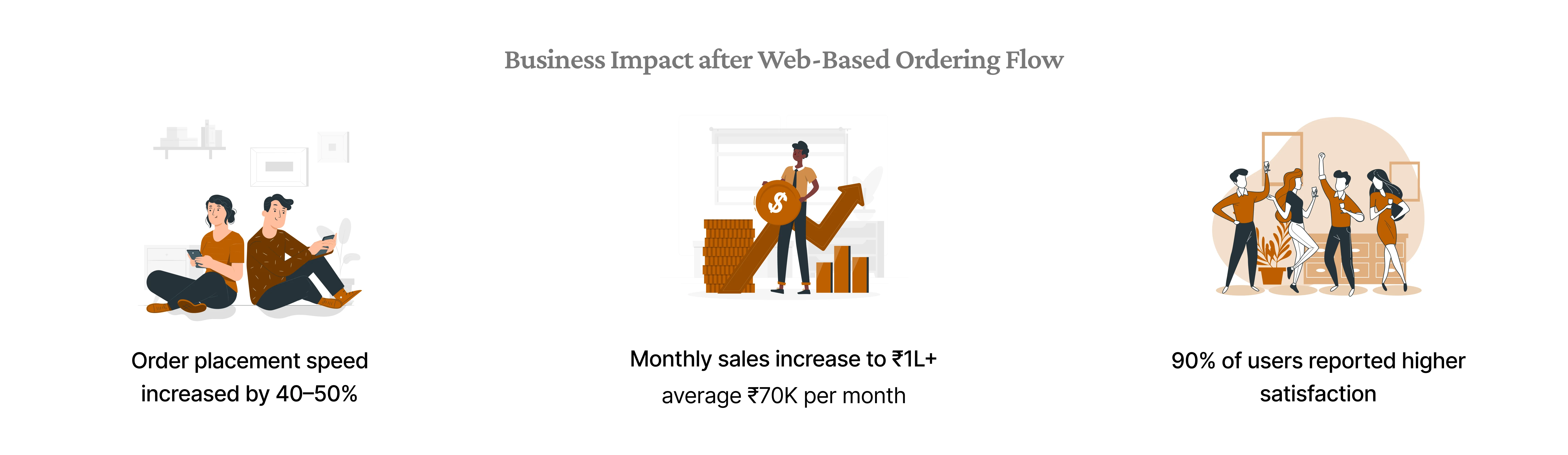
Faster ordering
The web flow made ordering 40 to 50% faster than WhatsApp.
Monthly sales
Sales grew from ₹70K to ₹1L+ a month.
Happier users
90% of users said ordering felt better.
Summary
This case study highlights how design goes beyond screens into
problem validation, decision-making, and scaling under constraints.
What began as a daily frustration at NIT Rourkela, limited food options, dull mess meals,
and
long delivery walks, led us to build a faster, simpler food ordering solution.
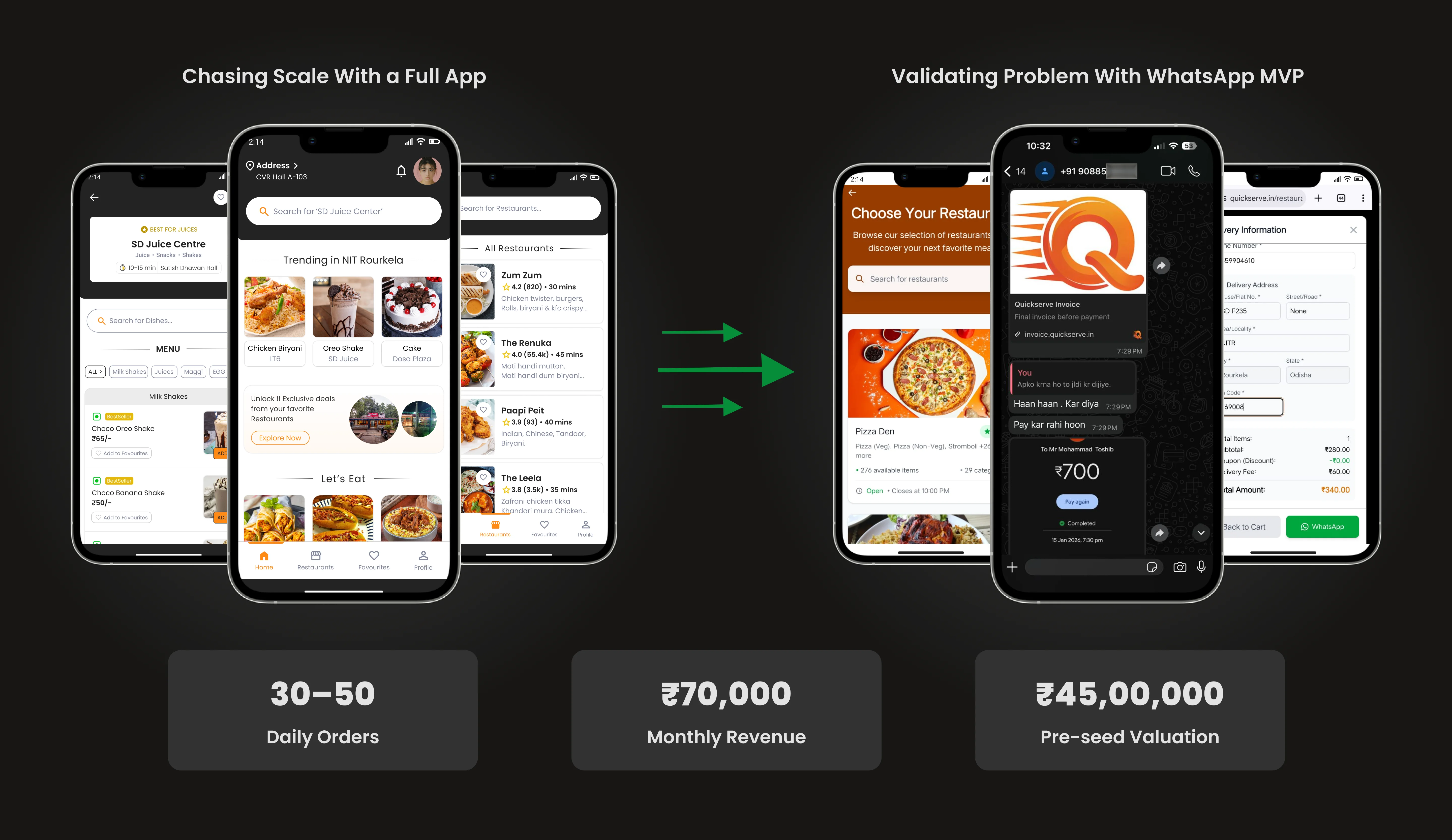
We initially planned to build a dedicated food delivery app, but with no funding
and
a small tech team, we pivoted to validating the idea through a WhatsApp based
service.
The Whole Story in 3 Minutes
Short on time? Kissi, a friend of mine, walks you
through the 2 km walk, the research, the WhatsApp pivot, the web ordering flow and the results.
The QuickServe story, narrated by Kissi. 3 minutes, subtitles on screen.
The Problem We are Solving
Students at NIT Rourkela faced poor mess food,
limited dining options, and a
2 km walk to Jagda Gate to collect orders, as existing food delivery platforms are not allowed
inside the campus.
How We Validated the Problem
Conducted multi-phase research with 500+ students at NIT Rourkela
Achieved 90% problem validation confidence and 80%
solution–market fit
Methods used:
14-day personal food behavior diary revealed frequent meal skipping due to time and
mood
Casual interviews with 25+ students across hostels showed 80% food
accessibility issues
Analysis of 1,500+ mess WhatsApp messages found 40% complaints about food
quality
Observations across mess halls and Jagda Gate trips exposed 25–30 minutes
lost per order and visible dissatisfaction
The Initial Solution We Tried
We initially planned to build a dedicated food delivery
app to solve hostel food accessibility issues at NIT Rourkela.
Research showed that students spend ₹500–1,500 per month on food,
rely heavily on Swiggy and Zomato, and are forced to walk nearly 2 km to
Jagda Gate since deliveries are not allowed inside hostels.
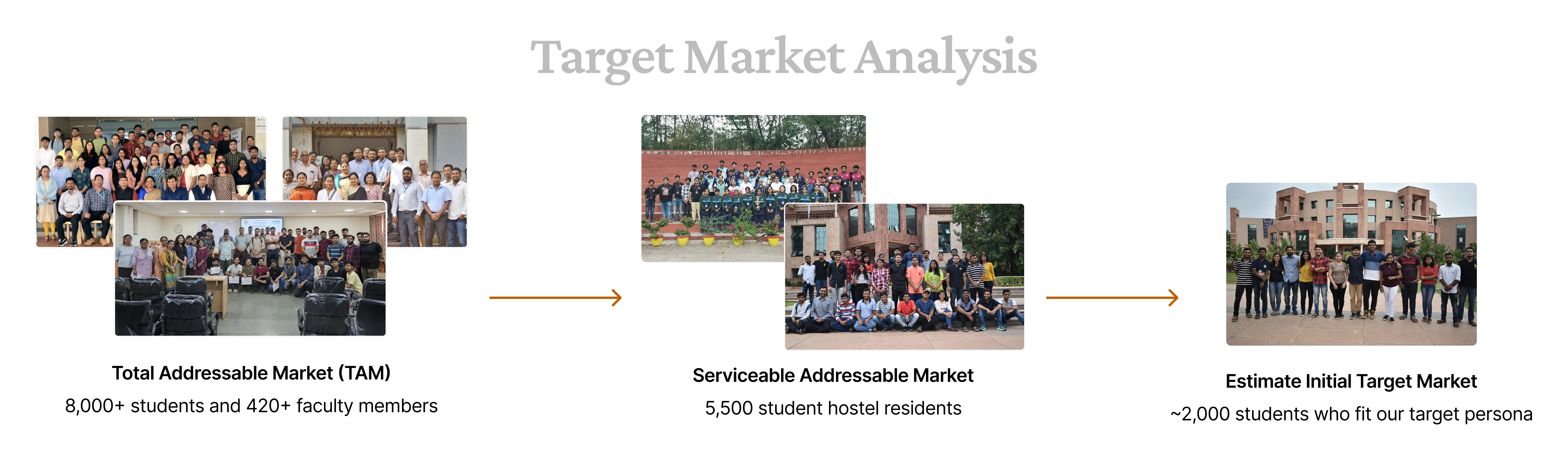
We identified an initial target market of ~2,000 hostel residents
and defined the MVP feature set by classifying users based on academic status and
spending patterns, mapping personas, anti-personas, and core user requirements.
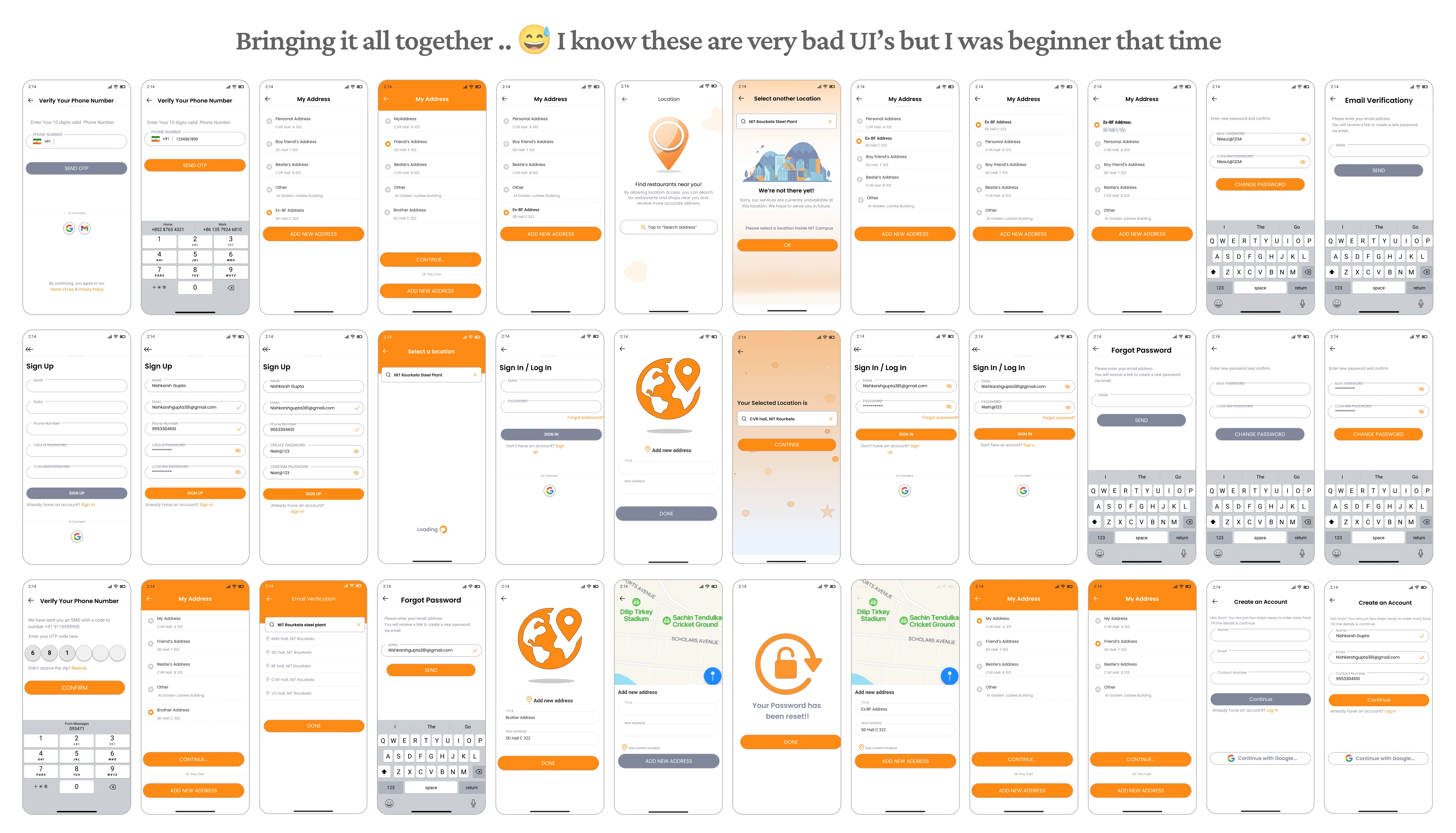
How We Approached Designing the App
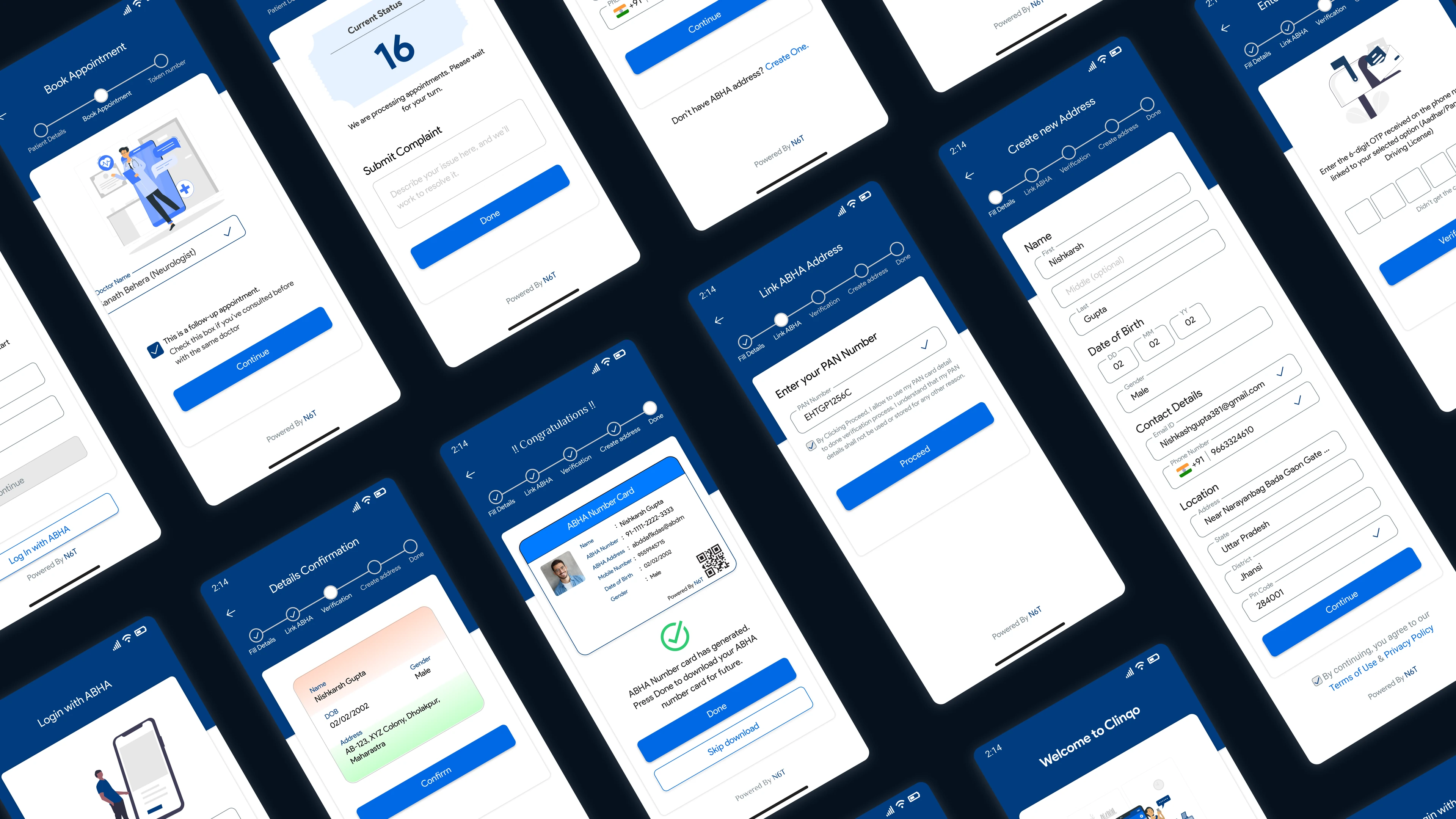
After defining the MVP features, we mapped core user flows using paper
sketches and sticky notes to quickly visualize happy paths and edge cases. Design and
development ran in parallel to move faster, with completed flows handed off incrementally to
developers.
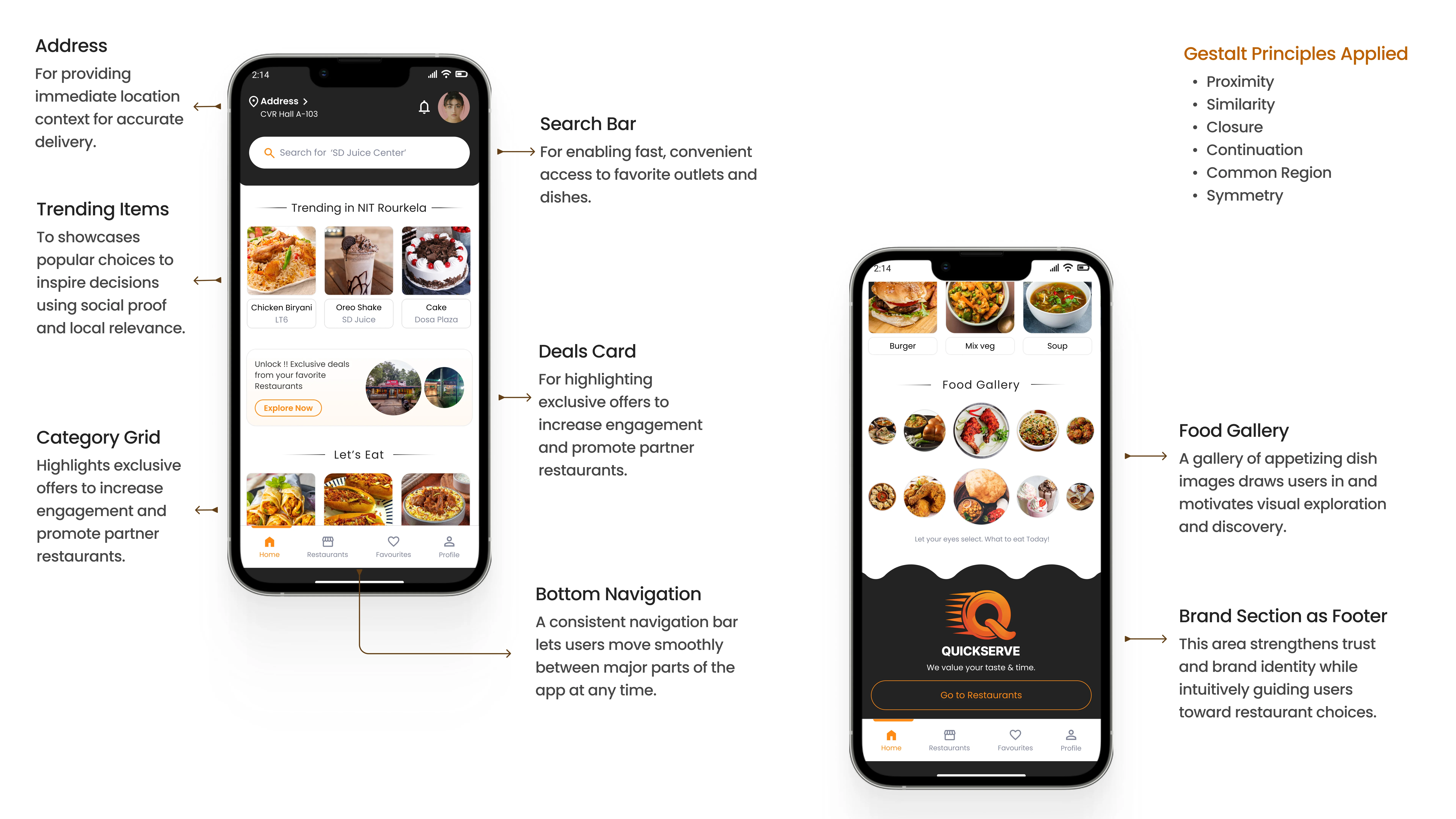
We followed familiar food delivery patterns
inspired by existing apps to reduce learning effort, aligning with Jakob’s Law. Ideas moved from
paper wireframes to high-fidelity UI, allowing rapid iteration without early design lock-in.
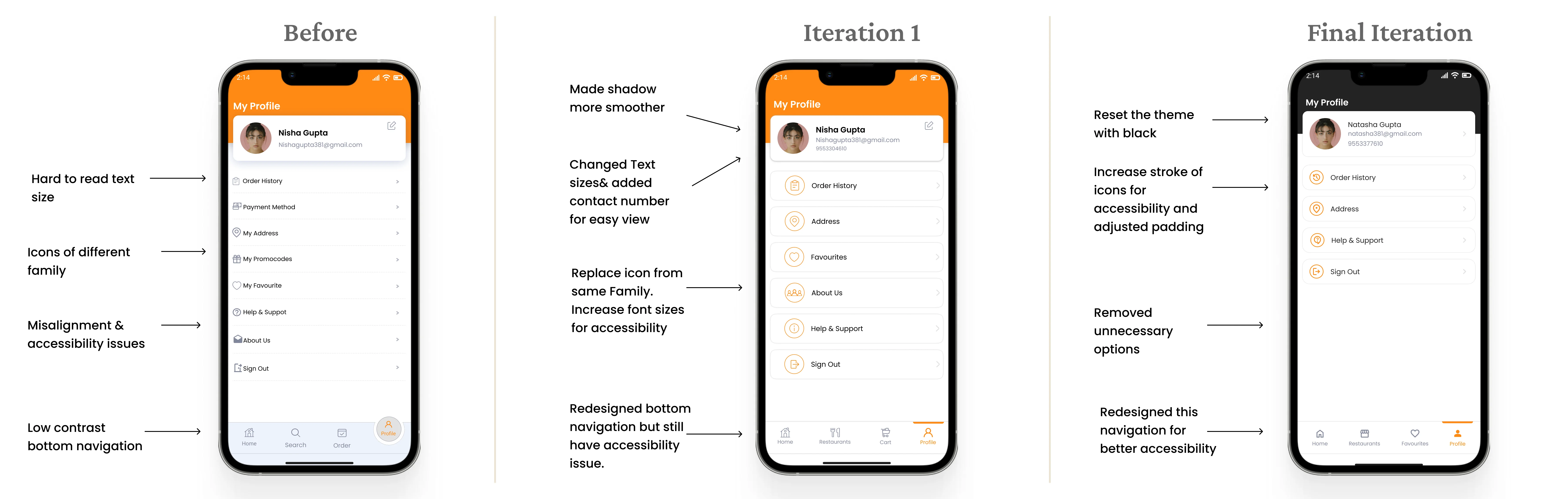
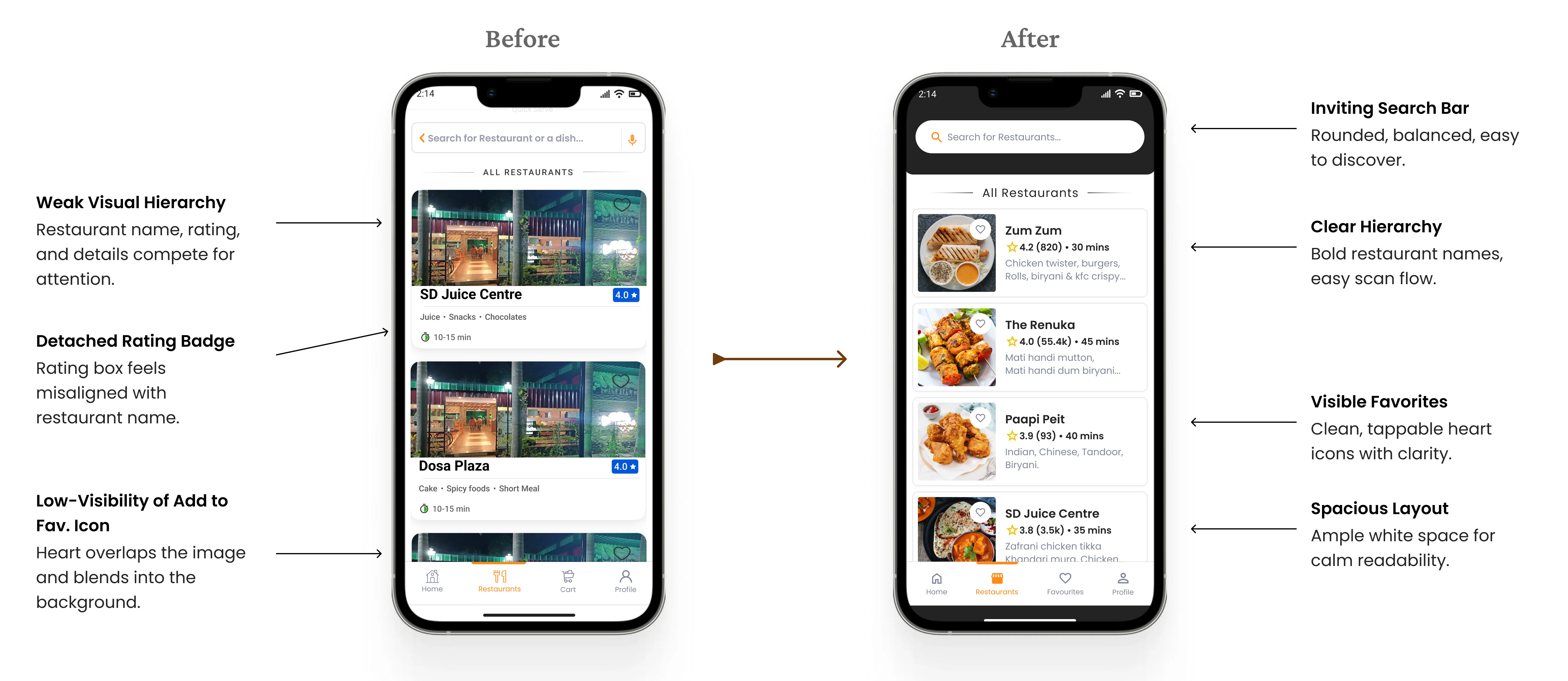
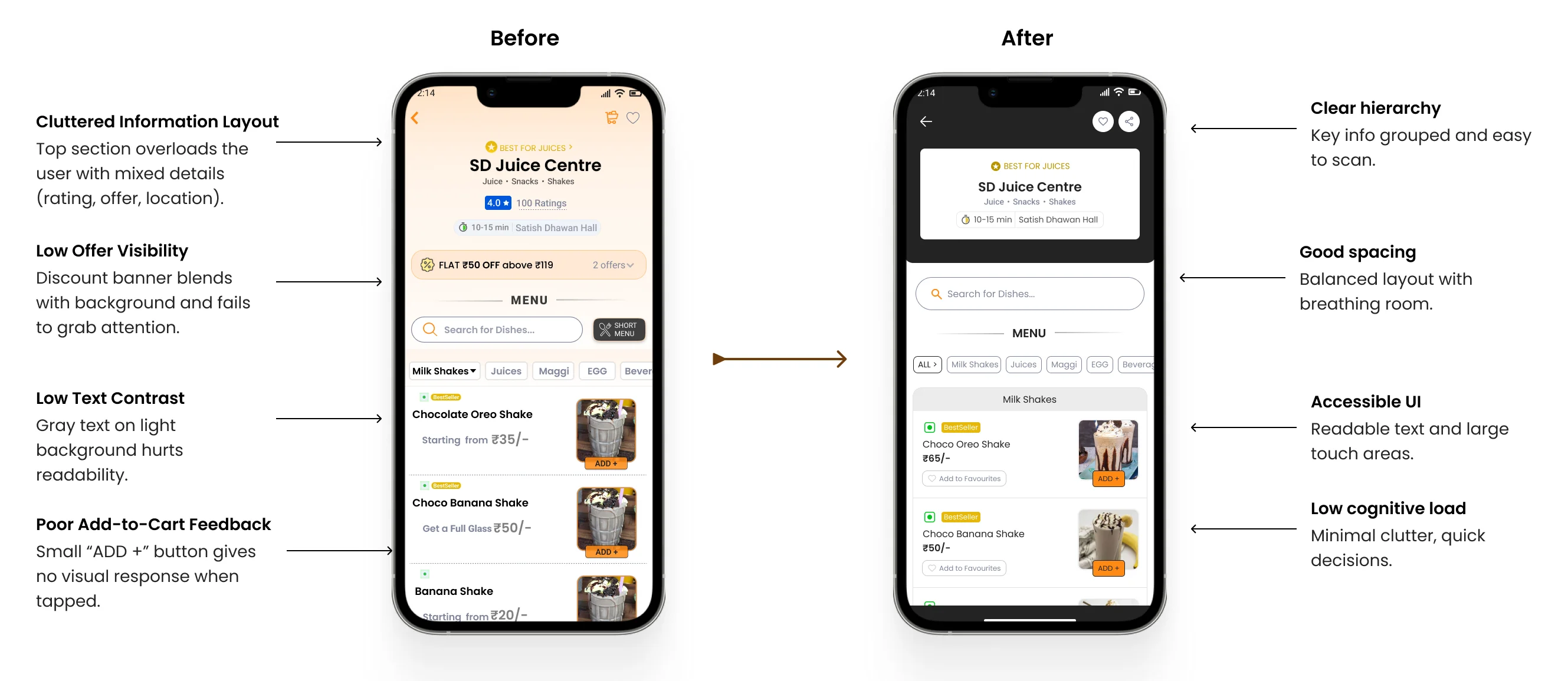
Since this was my early phase with Figma, I
iterated on these screens multiple times to improve layout clarity, visual hierarchy, and
overall usability, eventually arriving at a more refined and consistent final design.
Why We Pivoted to WhatsApp
When app development stopped due to technical
constraints, we realized that building a business was not about waiting for perfect technology.
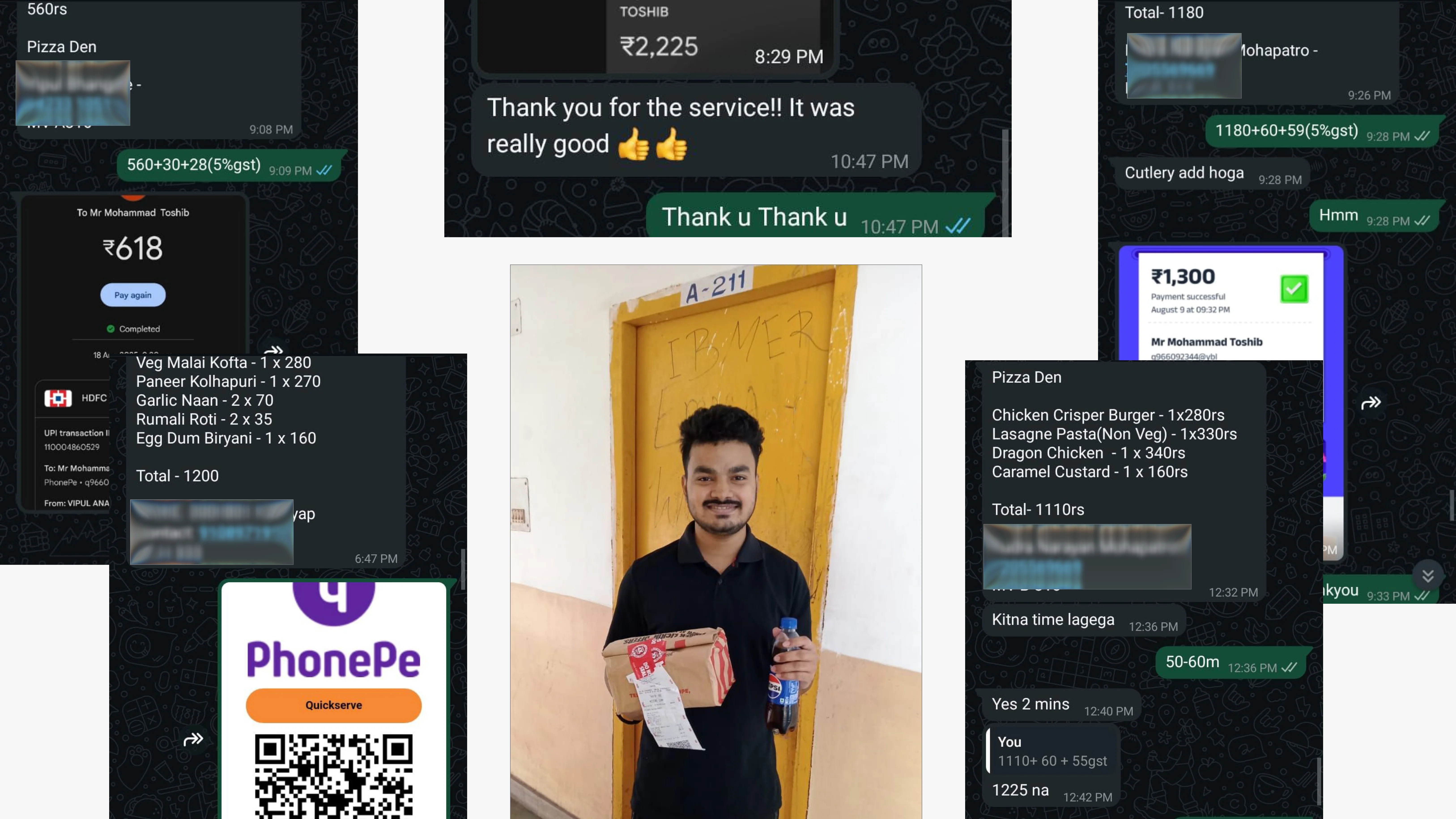
WhatsApp gave us a fast, no-build way to test
whether students truly needed the solution.
The goal was simple: prove usage first, then fund app development through
profits.
Overcoming Operational and Institutional Constraints
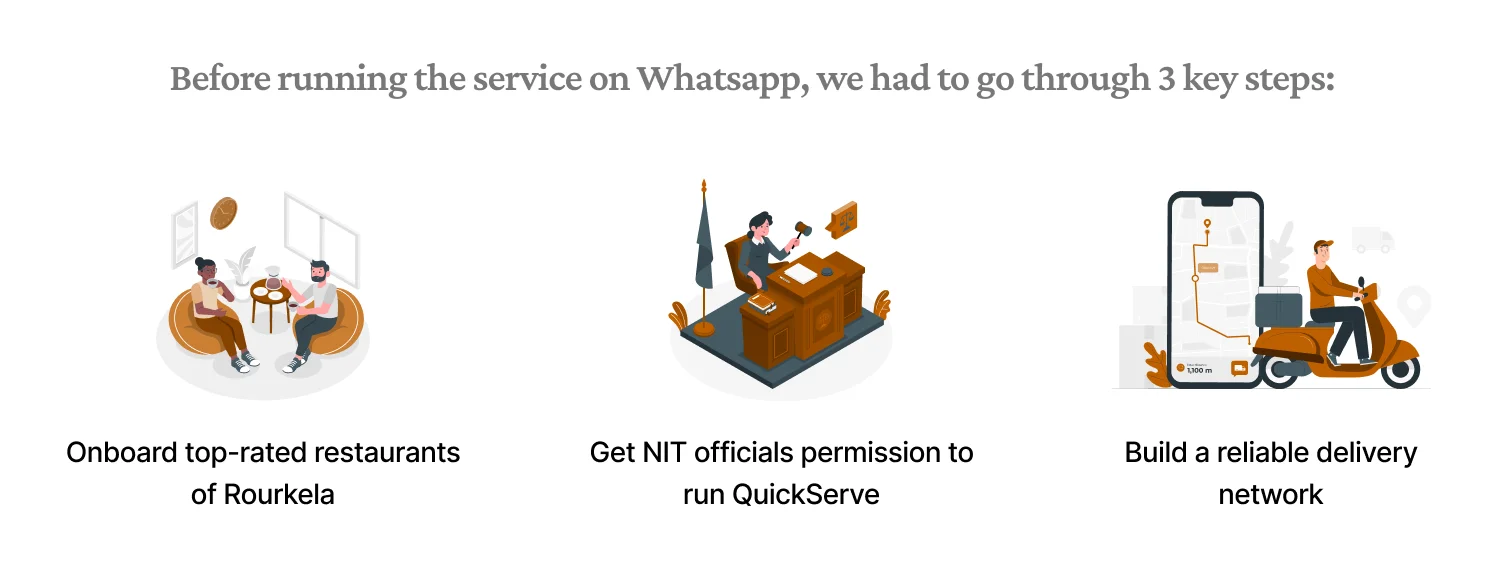
Before launching the service on WhatsApp, we focused on building
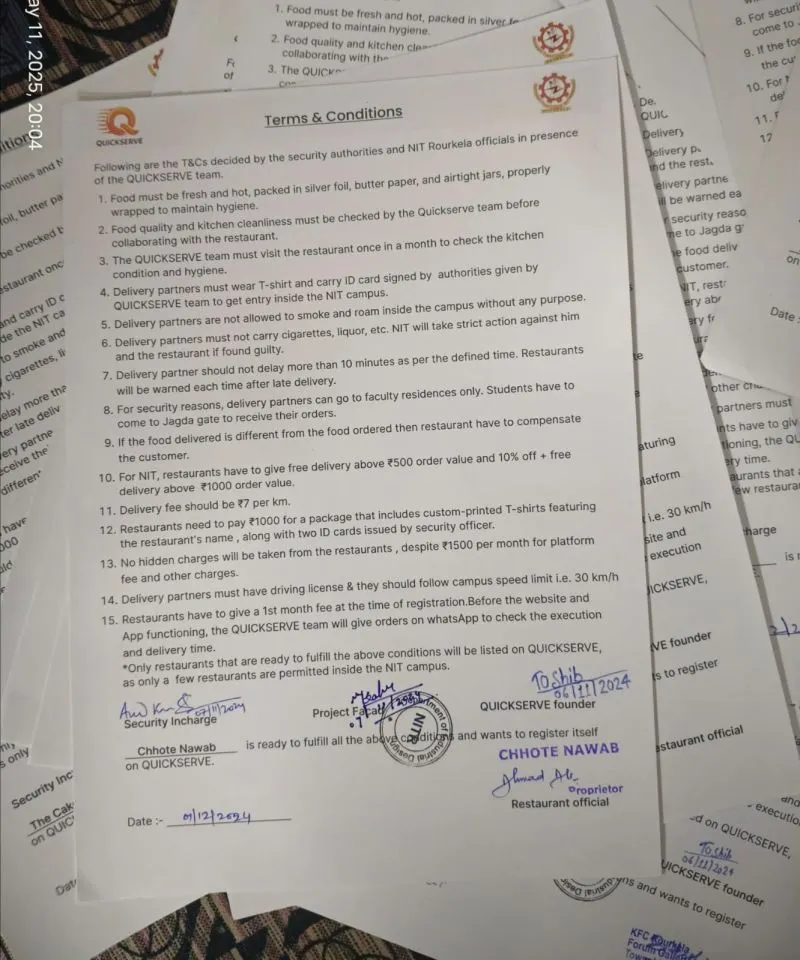
a strong operational foundation. The first step was onboarding top-rated restaurants in
Rourkela. To gain their trust as a first-time founding team, we created a formal MOU
that clearly defined expectations around food quality, hygiene, delivery
discipline, and operational transparency.
The second challenge was securing permission to
operate on campus. After navigating multiple approval layers, including FTBI, the on-campus
business committee, and security officials, we finally received partial approval from the
Registrar with restrictions on delivery access. While doorstep delivery inside hostels was not
permitted, this clarity helped us redesign the delivery flow within allowed
boundaries.
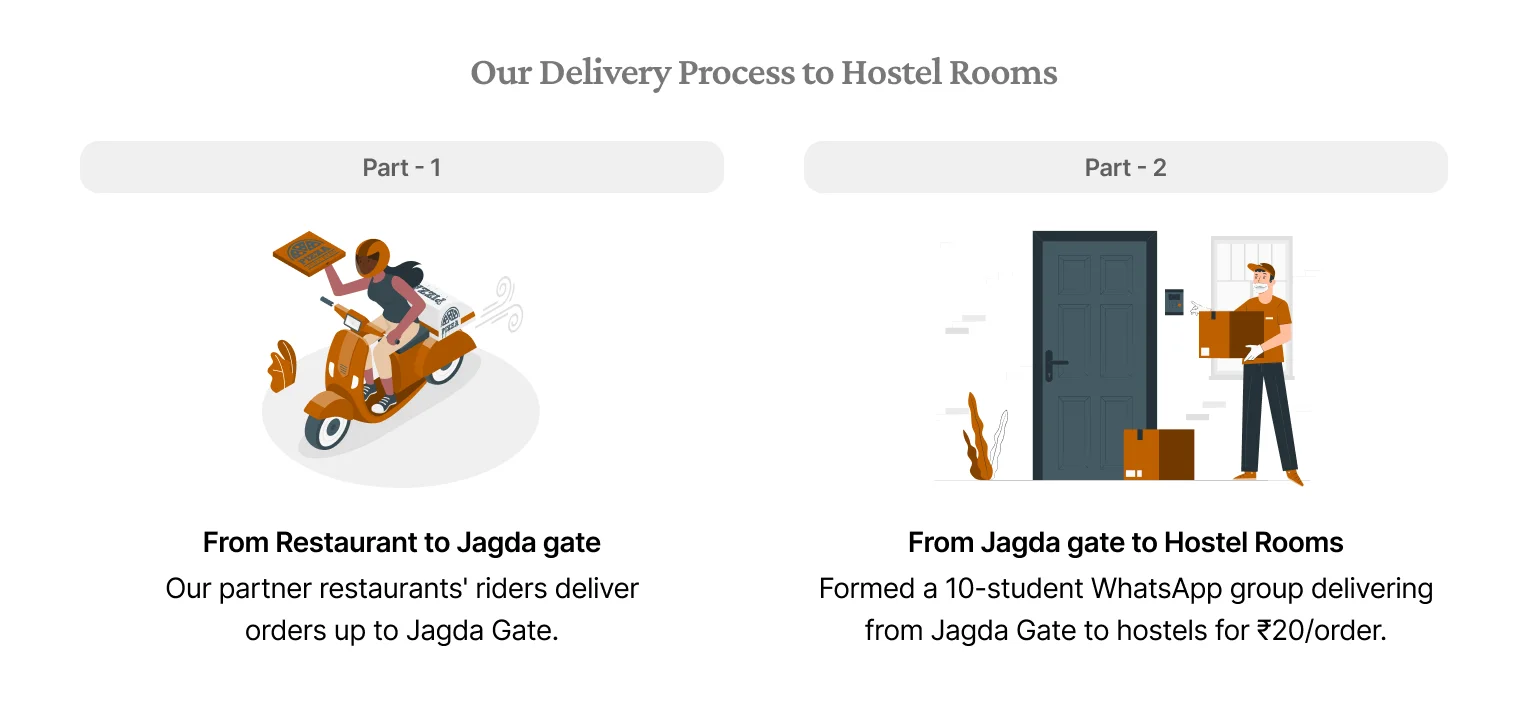
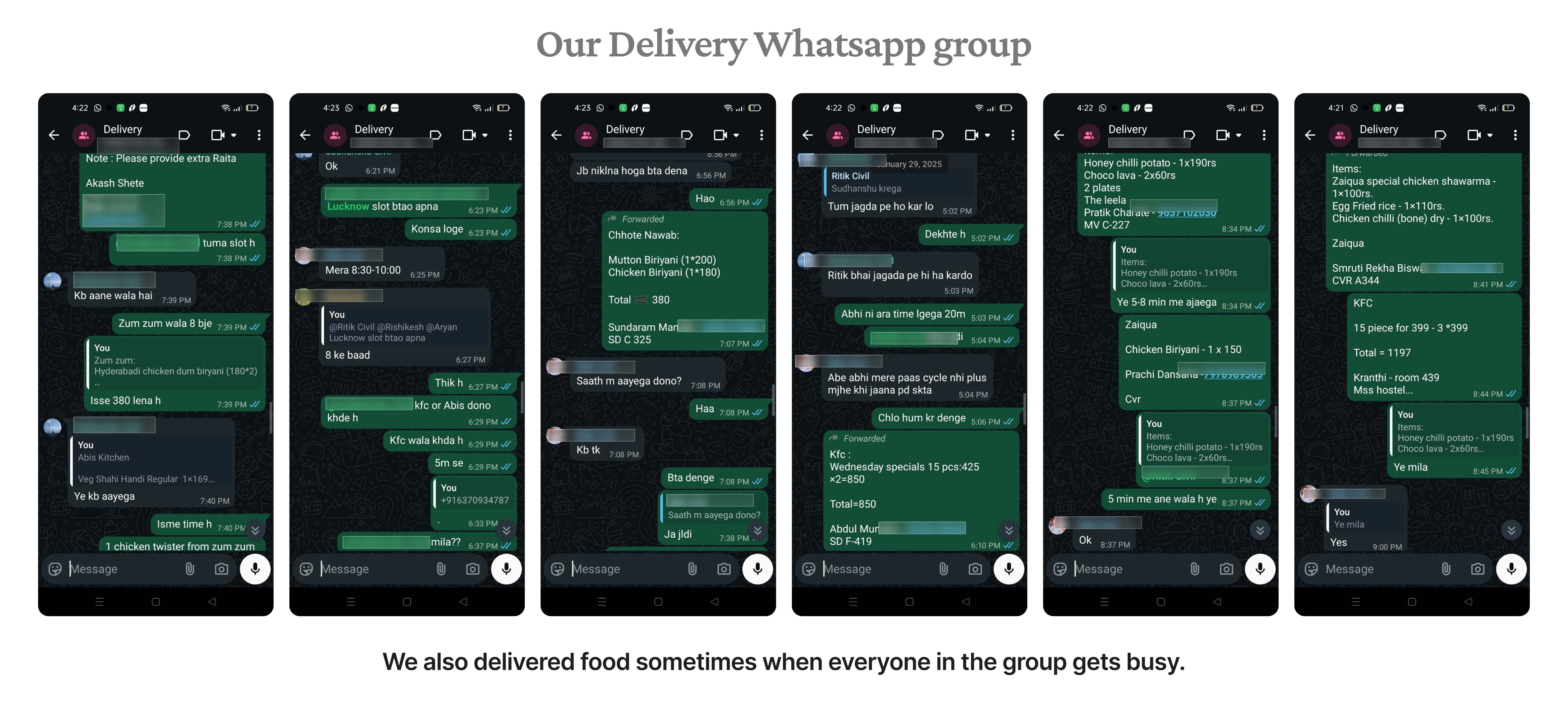
To solve the delivery problem, we built a
student-led delivery network. Orders were delivered up to Jagda Gate by external partners and
then carried to hostel rooms by student volunteers coordinated through WhatsApp. This approach
allowed us to complete deliveries efficiently while complying with campus rules.
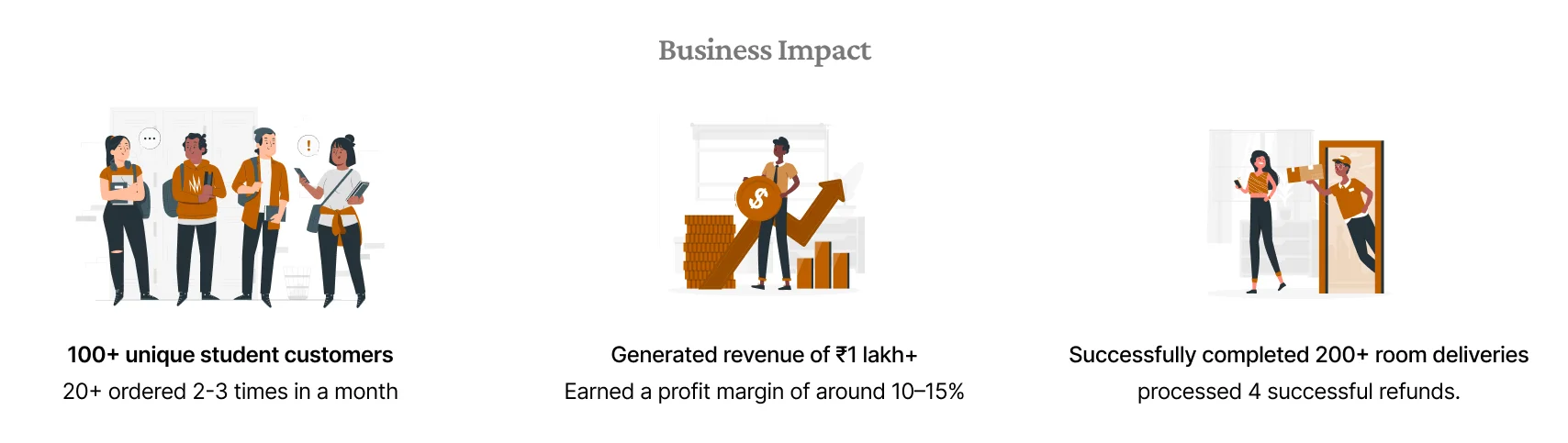
Impact Within the First Month
QuickServe received strong early adoption, driven by student
curiosity and word-of-mouth across campus.
Pre-launch promotion through WhatsApp
groups and on-campus posters generated high awareness.
Continuous feedback collection after each
delivery helped us rapidly improve service quality and operations.
What We Learned From User Feedback
We analyzed feedback from 100+ customers and spoke
with 50+ students during the first month to identify high-impact issues.
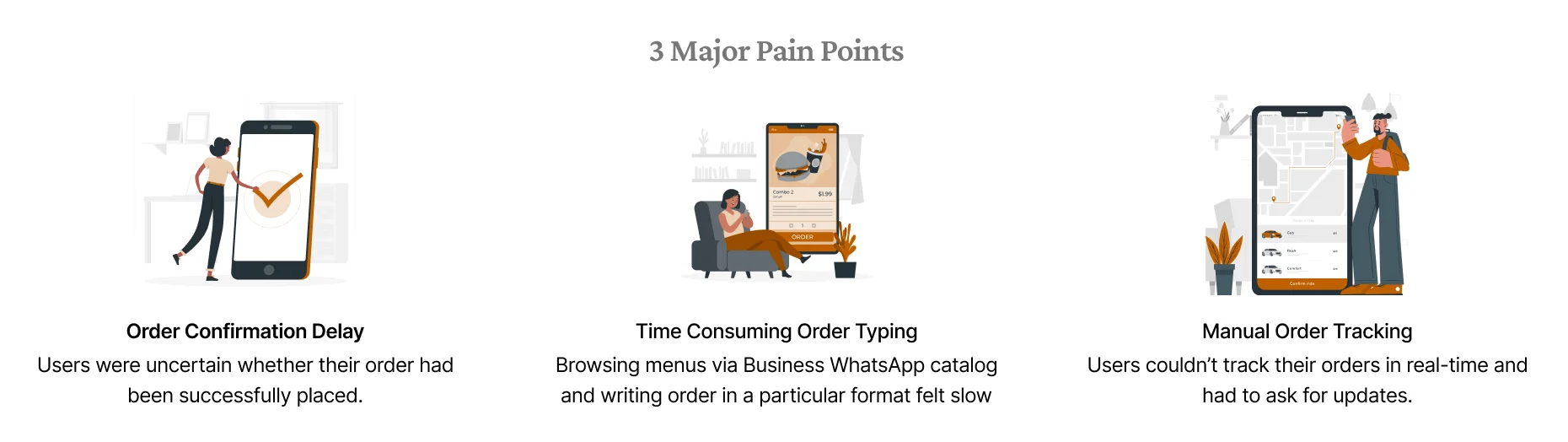
Rather than fixing minor problems, we
prioritized three major pain points that directly affected speed and revenue.
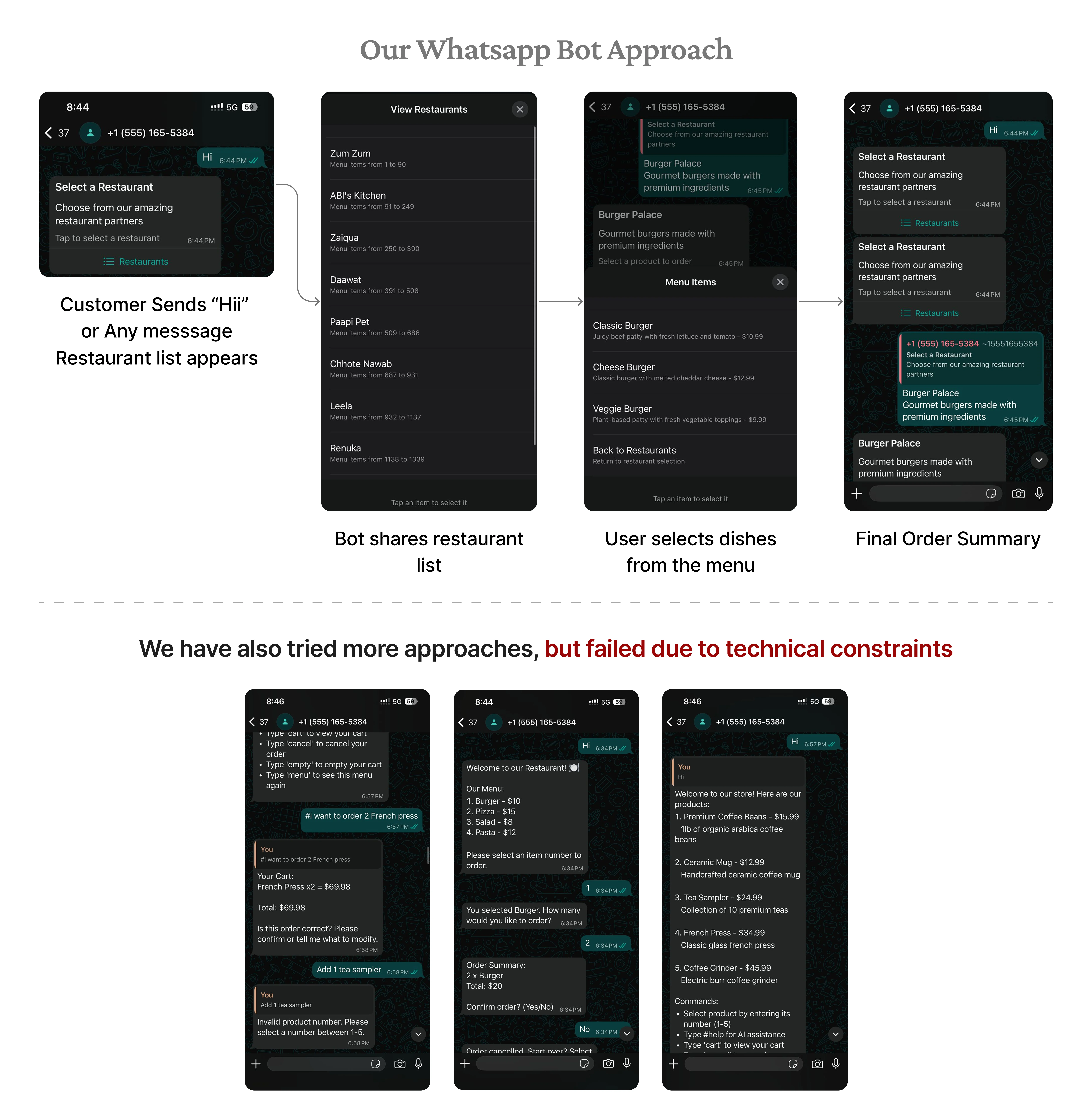
Solution 1 : WhatsApp Ordering Bot
We brainstormed solutions to address these pain points and explored
the concept of a WhatsApp ordering bot.
The goal was to eliminate manual catalog
browsing and structured message typing by automating order collection.
While we designed multiple bot flow
approaches, the final implementation could not be completed due to technical
constraints.
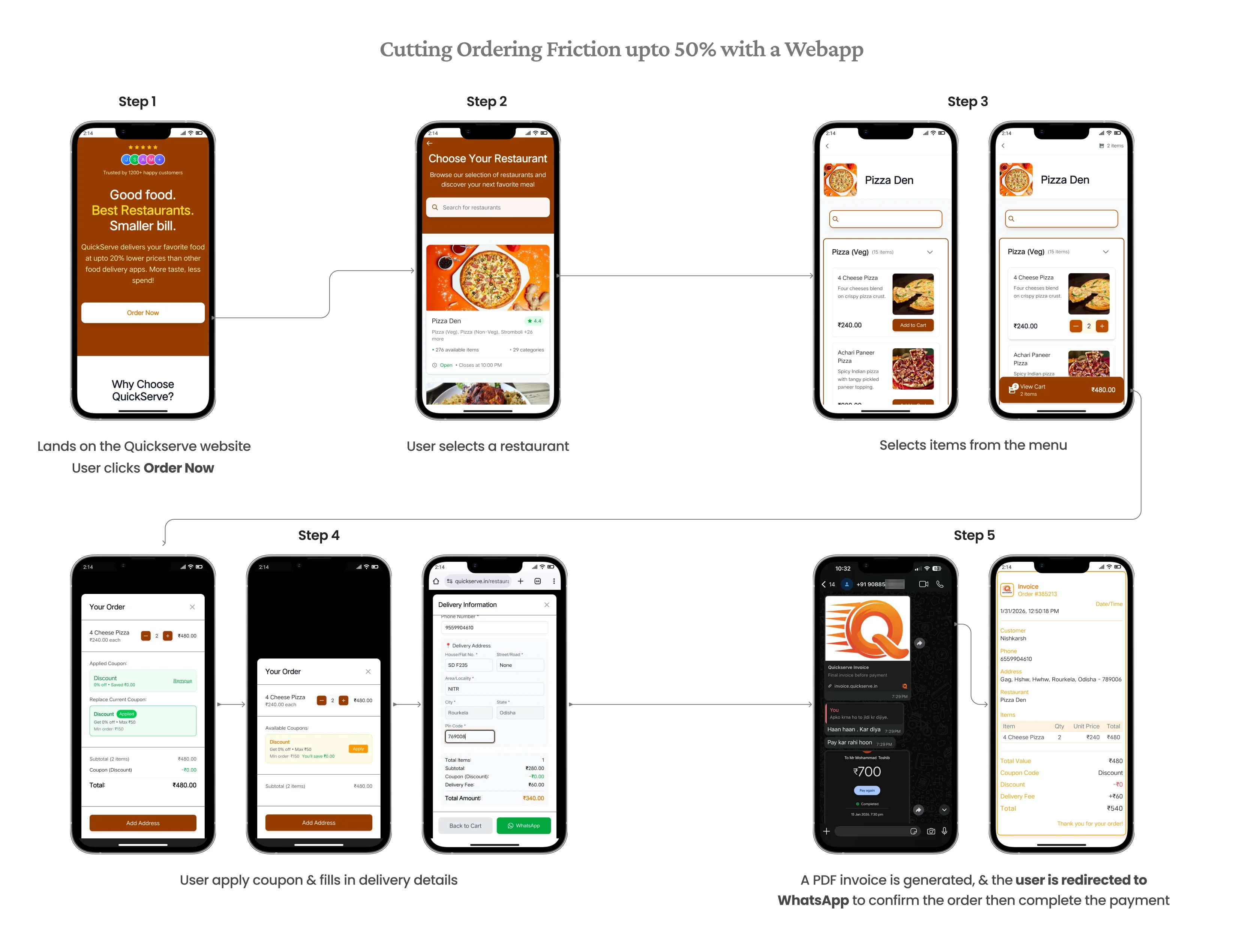
Solution 2 : Reducing Ordering Friction With a Web Based Flow
After the WhatsApp bot failed due to technical constraints, we shifted
to a lightweight web app to reduce typing errors and speed up ordering.
Users place orders on the web app, with the
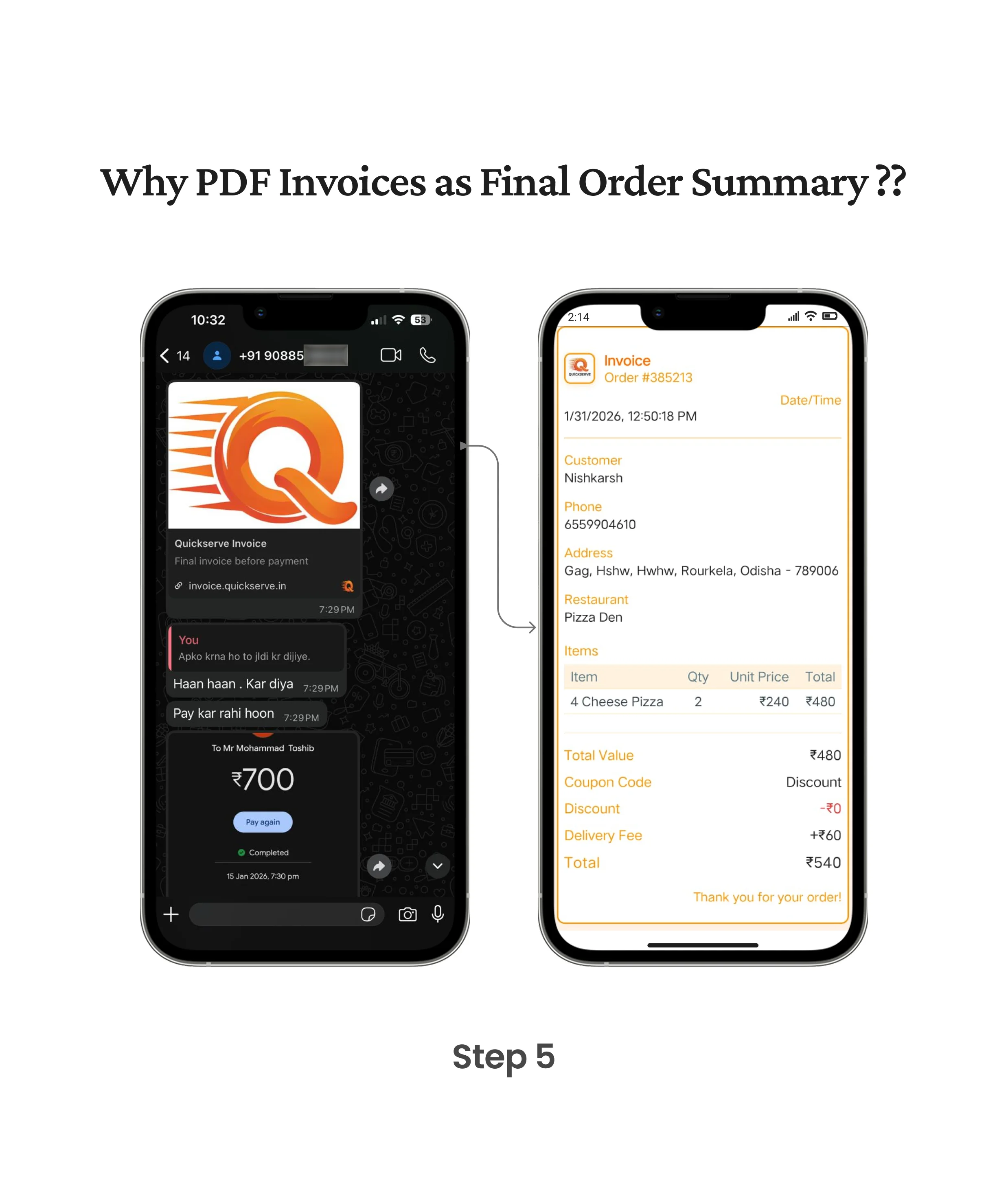
final order summary as PDF invoice sent to WhatsApp for confirmation.
I worked closely with developers to audit
flows, fix usability issues, and finalize the ordering experience.
42 min
YT vid, showing my thought process while audit
Why We Use PDF Invoices Instead of Text Format Directly?
Text-based orders can be edited, leading to pricing errors and
disputes.
PDF invoices act as a locked source of
truth, prevent manipulation, and reduce manual verification during WhatsApp-based order
confirmation.
Validation and Rollout Strategy
We started with internal alpha testing, then launched the web flow
as an alternative to WhatsApp to reduce risk and ease adoption.
Since our primary users are students, they
adopted the web-based ordering flow quickly and with minimal resistance.
Key Finding From Customer Testing
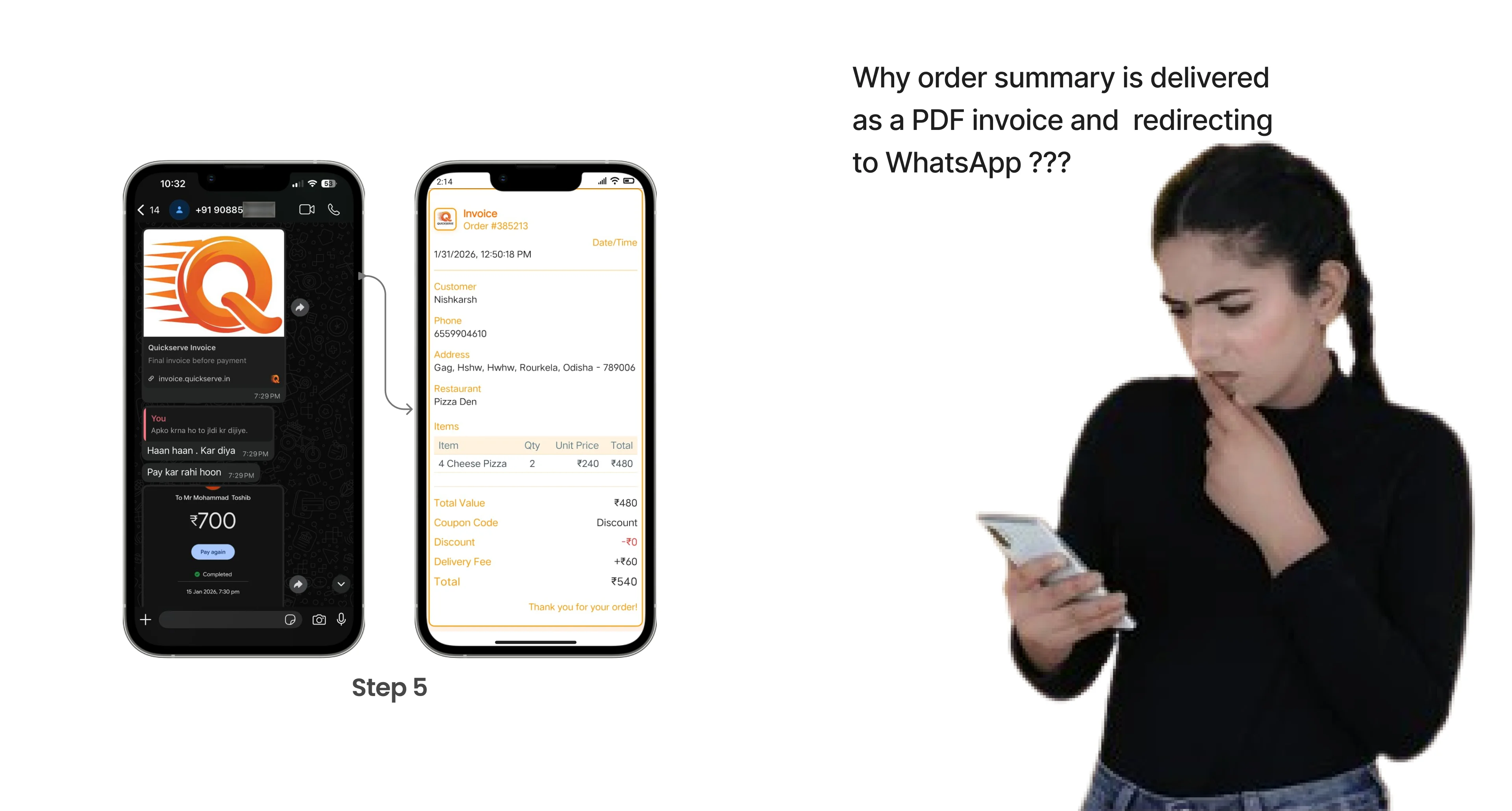
During moderated testing with 10 users, some first time users were briefly
confused by the PDF invoice and WhatsApp redirection.
However, existing trust prevented drop-offs, and users quickly adapted, with
task completion improving rapidly after the first attempt.
Impact of the Web-Based Ordering Flow
The web-based flow boosted order speed by 40–50%, increased
monthly sales to ₹1L+ from ₹70K, and improved satisfaction for
90% of users, while highlighting order tracking as the next improvement area.
What’s Next and Future Goals
With early validation complete, we are scaling QuickServe beyond MVP
by outsourcing app development, funding the build through profits, and expanding across
Rourkela with a faster, more localized delivery experience.
What I Learned Over the Last 1.5 Years ??
A designer’s role goes beyond Figma into understanding users, systems, constraints, and
outcomes.
The most impactful design decisions are those that move key metrics and drive business
value.
Designing under constraints sharpens focus on solving meaningful problems that create major
impact.
Further reading
Want every detail? The long version lives on Medium.