Search
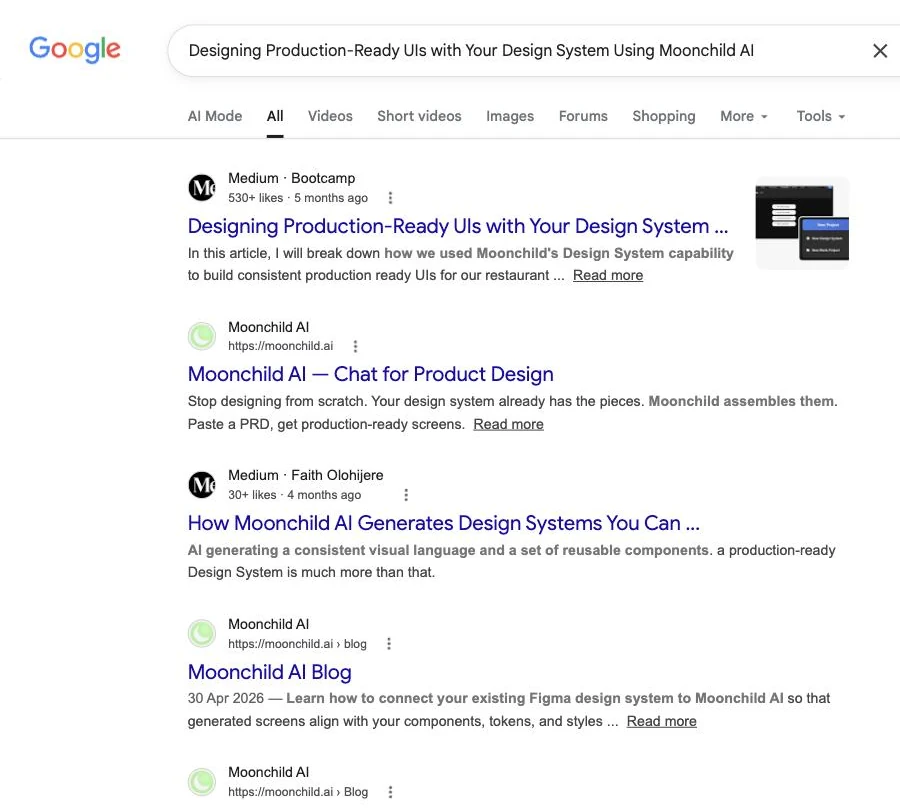
5 Google page one rankings, the best at #1.
5 Google page one rankings, the best at #1.
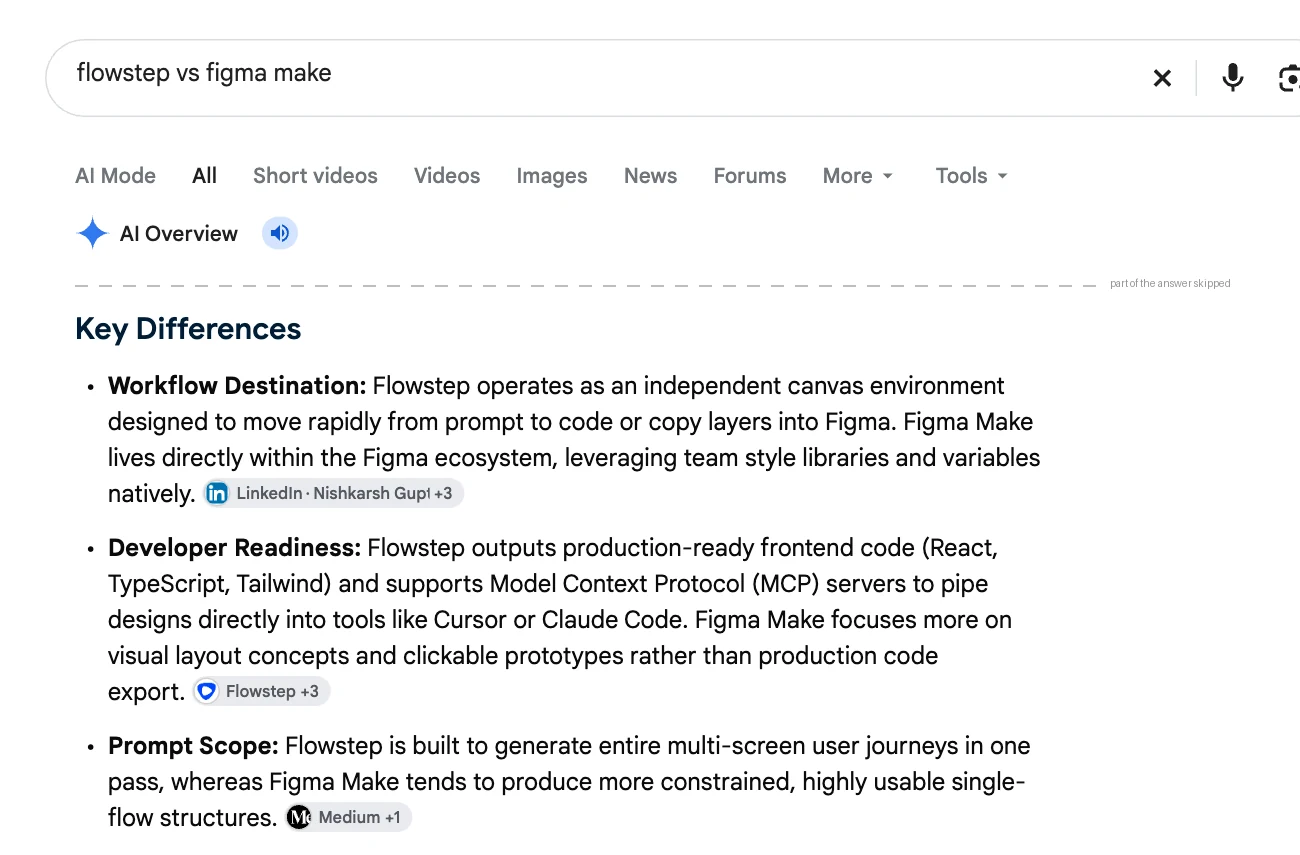
A cited source in Google's AI Overview for "flowstep vs figma make".
10.8K views and 4.6K reads on the 5 tool articles.
A new AI design tool lives or dies by one thing: do designers find it? They find tools in three places now: Google, the AI answer at the top of Google, and chat tools like ChatGPT and Perplexity.
I wrote about three tools, Moonchild, Flowstep and Dualite, across five Medium articles and one LinkedIn article. They rank on Google page one for 5 search terms, one at #1, and Google's AI Overviews use them as sources.
Want the proof? Each brand has its own report full of dated screenshots:
All three reward the same thing: the clearest, most trusted answer to a question people actually ask.
On 27 September 2026 I read every number from my own dashboards: Medium lifetime stats, LinkedIn creator analytics and LinkedIn article analytics. Then I searched Google in English for the terms each article targets, and looked at the top 10 results and the AI Overview.
Google results change by place, device and time. Each search term below links to a live search, so you can check it yourself.
The five tool articles have 10.8K views and 4.6K reads. A read on Medium means someone stayed for at least 30 seconds, so about 4 in 10 visitors really read them.
The LinkedIn article, Top 5 AI Prototyping Tools in 2026: I Tested Flowstep, Figma Make, Google Stitch, V0 and Claude Design, reached 2,247 impressions and 182 article views, with 27 reactions, 4 comments and 1 repost.
Five search terms put one of my articles on page one. Two of them are the same LinkedIn article.
| Search term | My result | Position | Where |
|---|---|---|---|
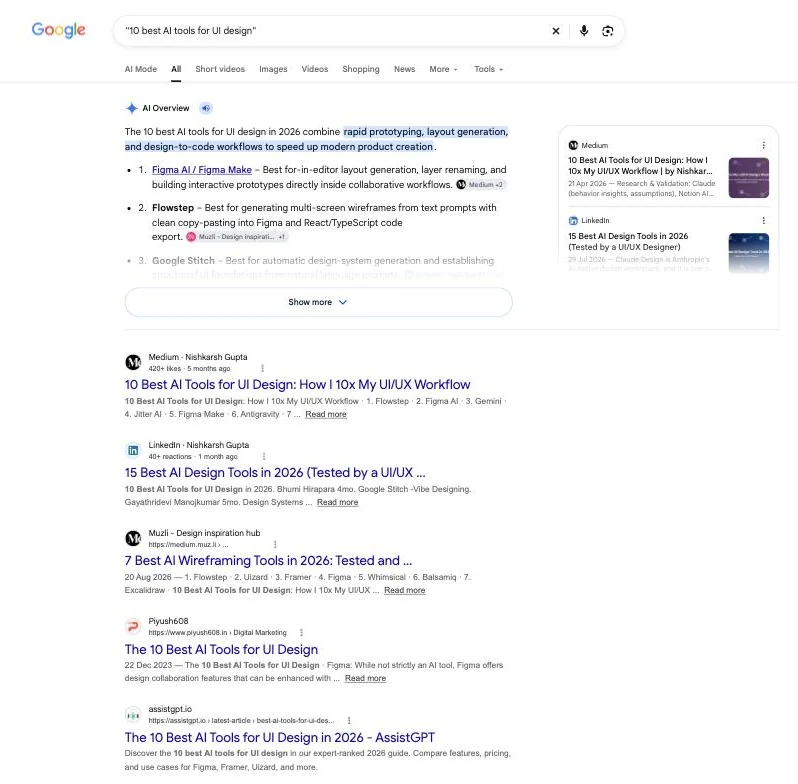
| 10 best ai tools for ui design | 10 Best AI Tools for UI Design: How I 10x My UI/UX WorkflowMedium, Bootcamp | #1 | Checked 21 Sep 2026. Also the first source in the AI Overview |
| best ai wireframing tools 2026 | 7 Best AI Wireframing Tools in 2026: Tested and Compared by a DesignerMedium, Muzli | #2 | Organic result |
| flowstep vs figma make | Top 5 AI Prototyping Tools in 2026: I Tested Flowstep, Figma Make, Google Stitch, V0 and Claude DesignLinkedIn article | #3 | Also a cited source in the AI Overview |
| which ai tools are worth it for ux designers | Which AI Tools Are Worth It for UX Designers in 2026?Medium, Bootcamp | #6 | It was #1 on 23 Jul 2026, for the same search ending in "in 2026" |
| best ai prototyping tools 2026 | Top 5 AI Prototyping Tools in 2026: I Tested Flowstep, Figma Make, Google Stitch, V0 and Claude DesignLinkedIn article | #7 | Organic result |
Not on page one yet: "moonchild ai review", "moonchild ai design system", "flowstep ai", "dualite ai review", "best ai ui generator 2026", "best ai tools for ui design 2026". Brand name searches are harder, because the brand's own site and bigger review sites take most spots.
Google's AI Overview for "flowstep vs figma make" cites my LinkedIn article, next to Flowstep's own blog. When someone asks Google to compare Flowstep with Figma Make, my test is part of the answer.
It happens on Medium too. On 21 September, the AI Overview for "10 best AI tools for UI design" listed my article as its first source, and my Muzli article has already had readers from gemini.google.com.
Next I am checking the same questions in ChatGPT, Perplexity and Gemini, and will add those results here with dates.
An AI design tool that makes UI screens from your own design system. 5.1K Medium views and 2.4K reads so far.
Both articles hit #1 on Google in July. One was Boosted by Medium. See the report.
An AI design tool that turns a prompt or a PRD into connected screens and user flows. 5.3K Medium views and 2.1K reads so far.
#1 on Google and Bing for its title, and a cited source in Google's AI Overview. See the report.
An AI builder that helps designers turn designs into working apps. 412 Medium views and 156 reads so far.
The smallest of the three so far. Next step: a search friendly follow up article.
See all my growth work in one place.
Reach, rankings, LinkedIn growth and the tools I built 367K LinkedIn impressions in a year, 8,144 followers, and more. Open the Growth page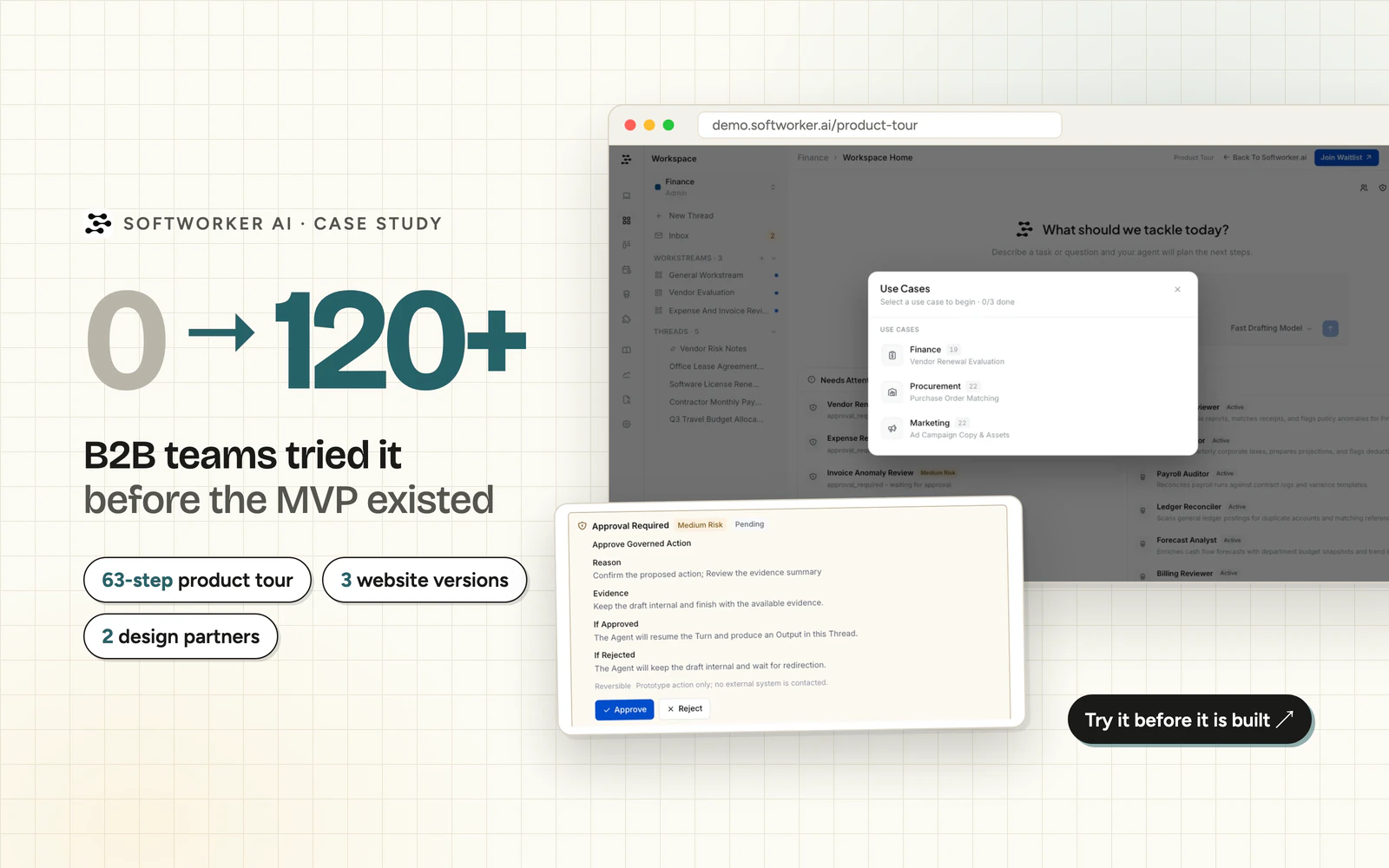
An interactive product tour that let 120+ B2B teams try Softworker before the MVP existed.
Read case study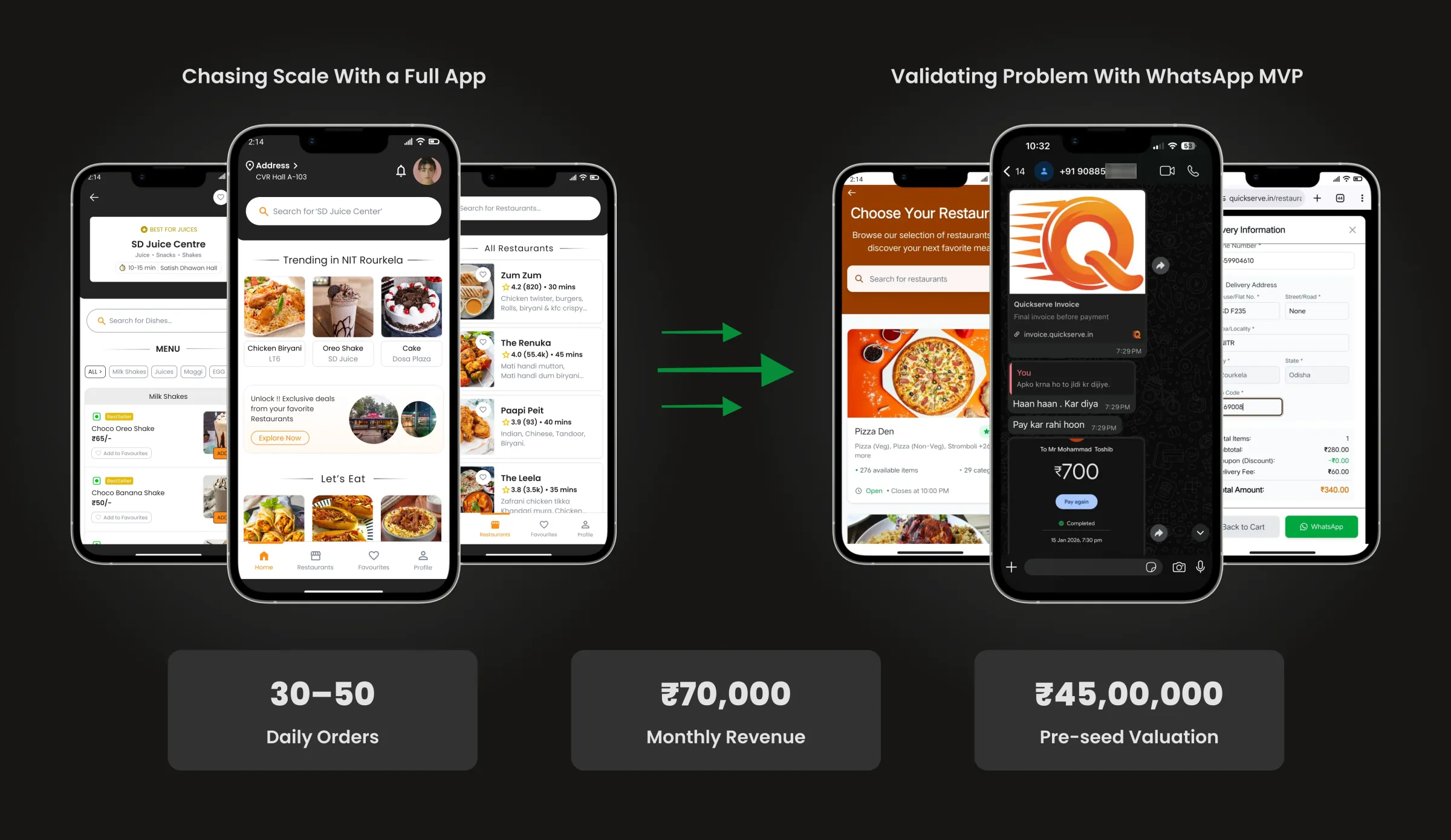
A campus food delivery startup at NIT Rourkela. Monthly sales grew from ₹70K to ₹1L+.
Read case study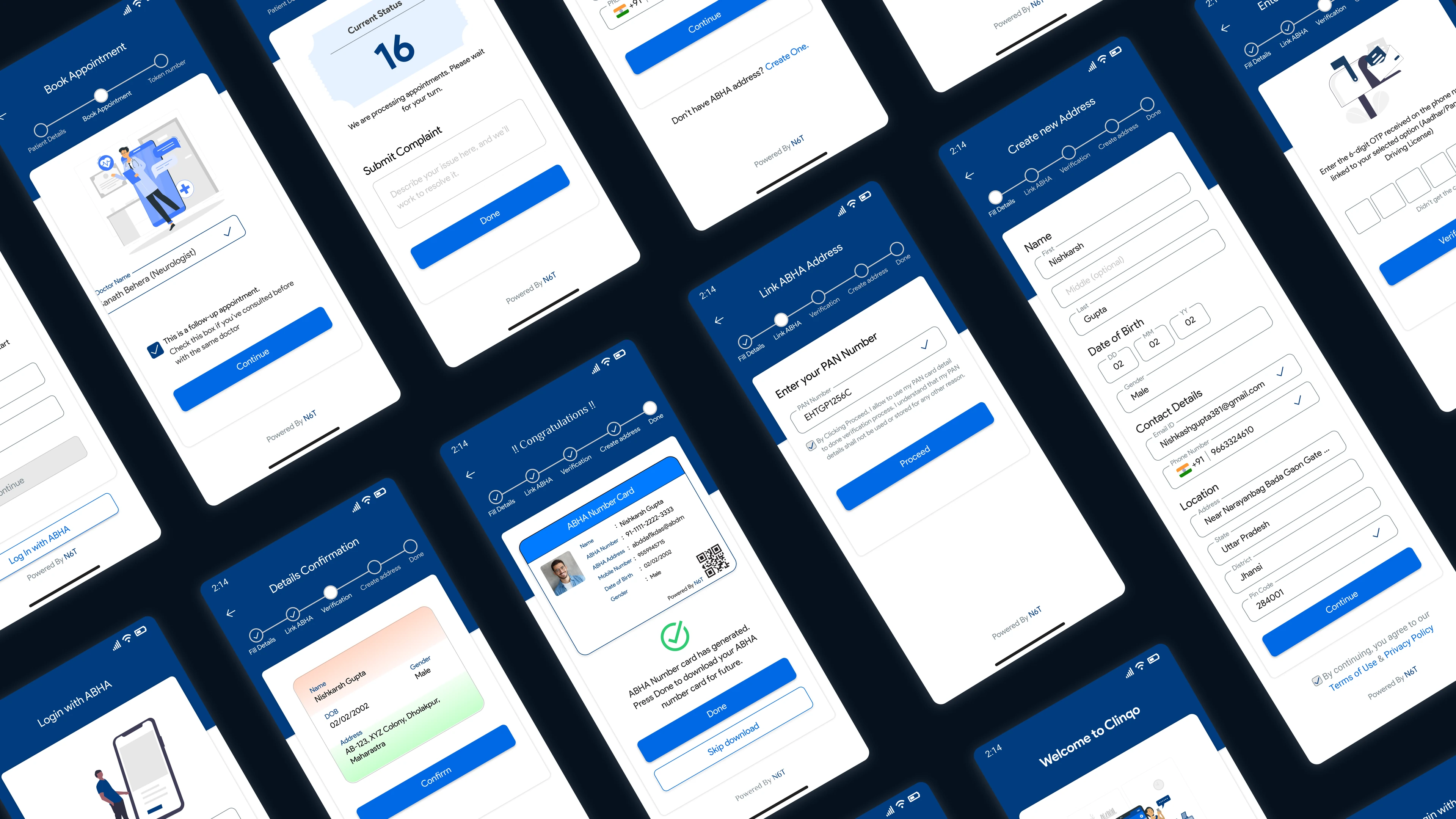
ABHA compliant OPD booking, designed in 4 weeks. It won a ₹12K hospital pilot.
Read case study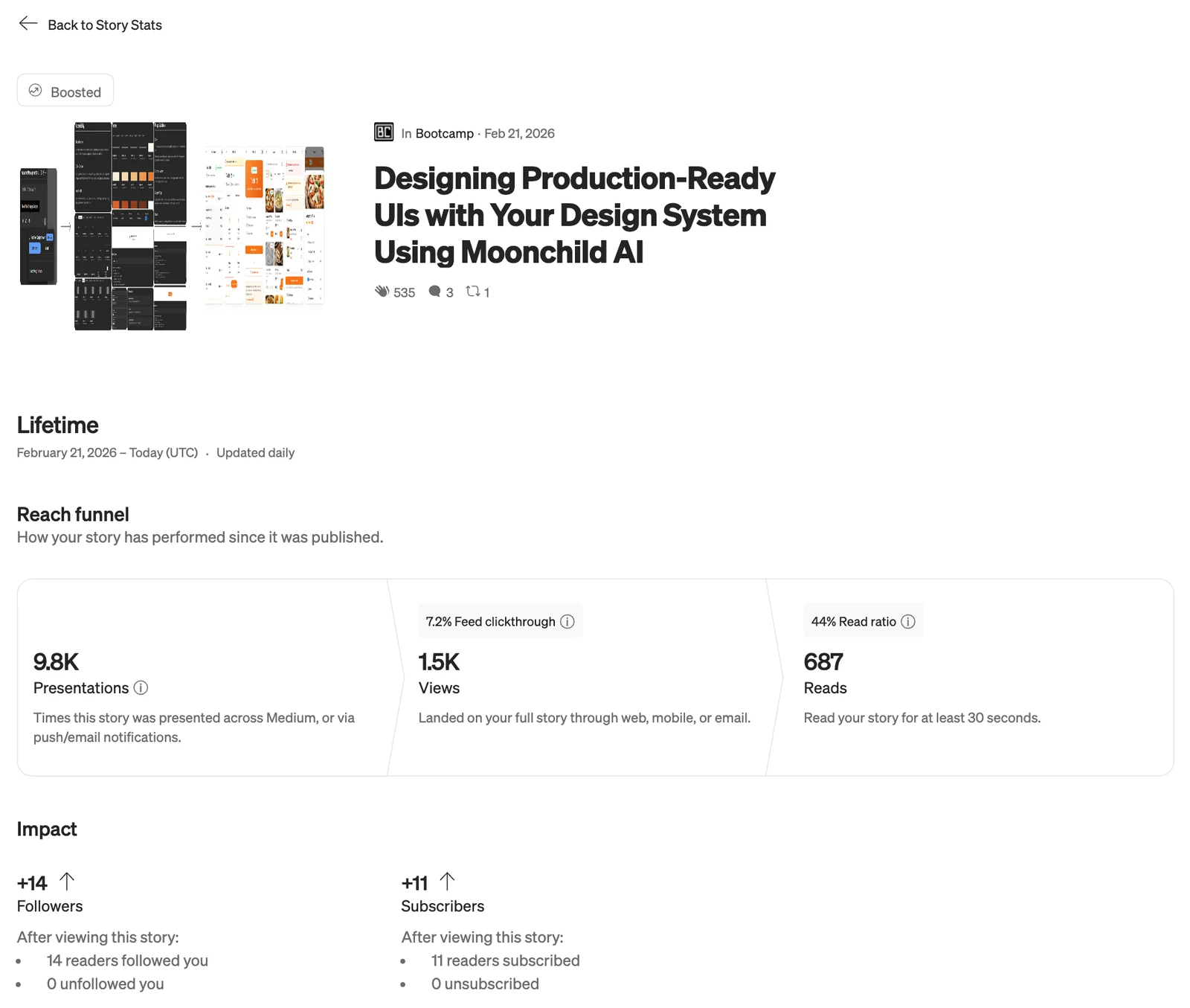
Two articles, one Boosted by Medium, both #1 on Google in July.
Read case study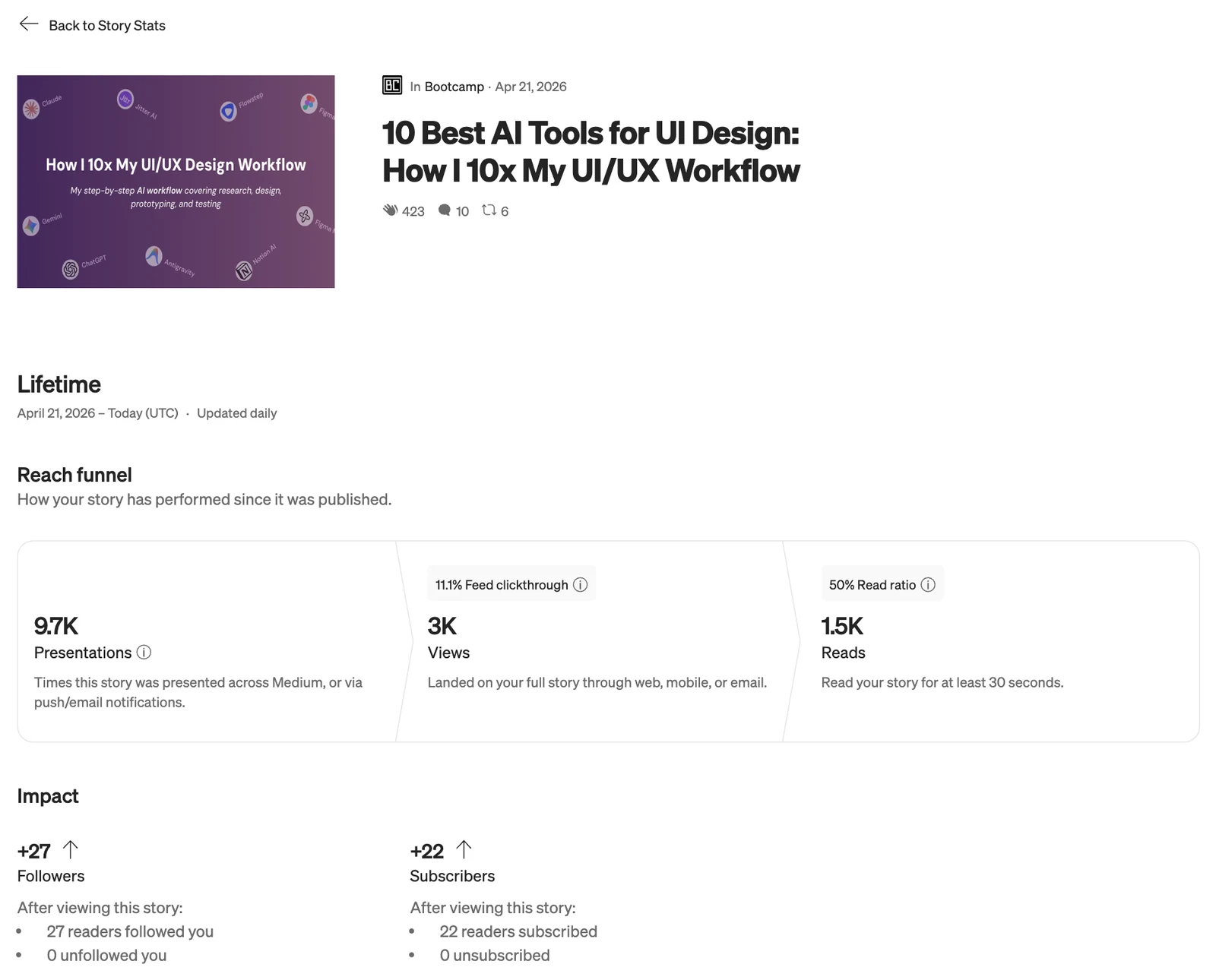
#1 on Google and Bing, 2.1K readers from Google, and cited in AI Overviews.
Read case study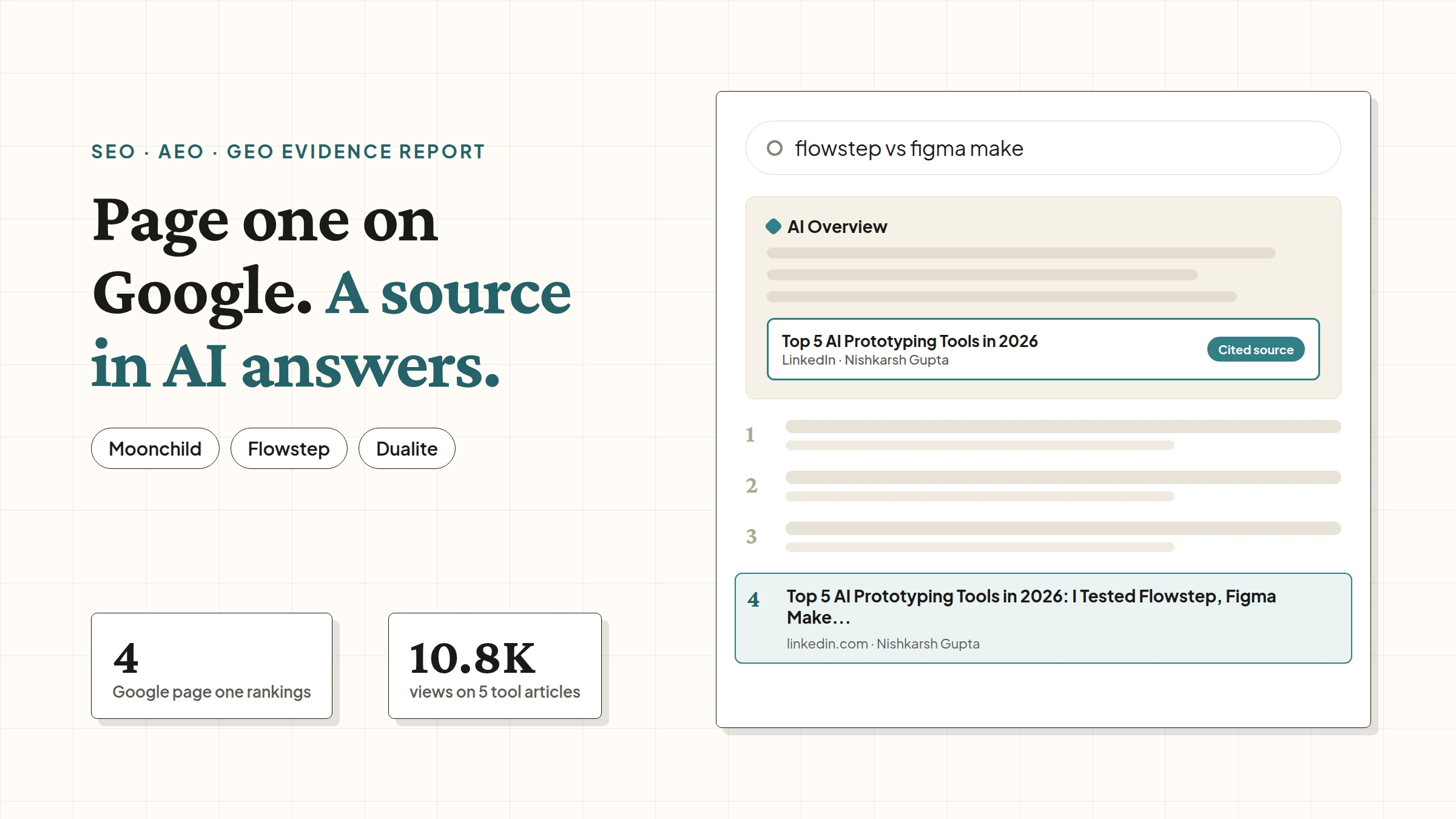
Reach, rankings, LinkedIn growth and the growth tools I built.
Read case study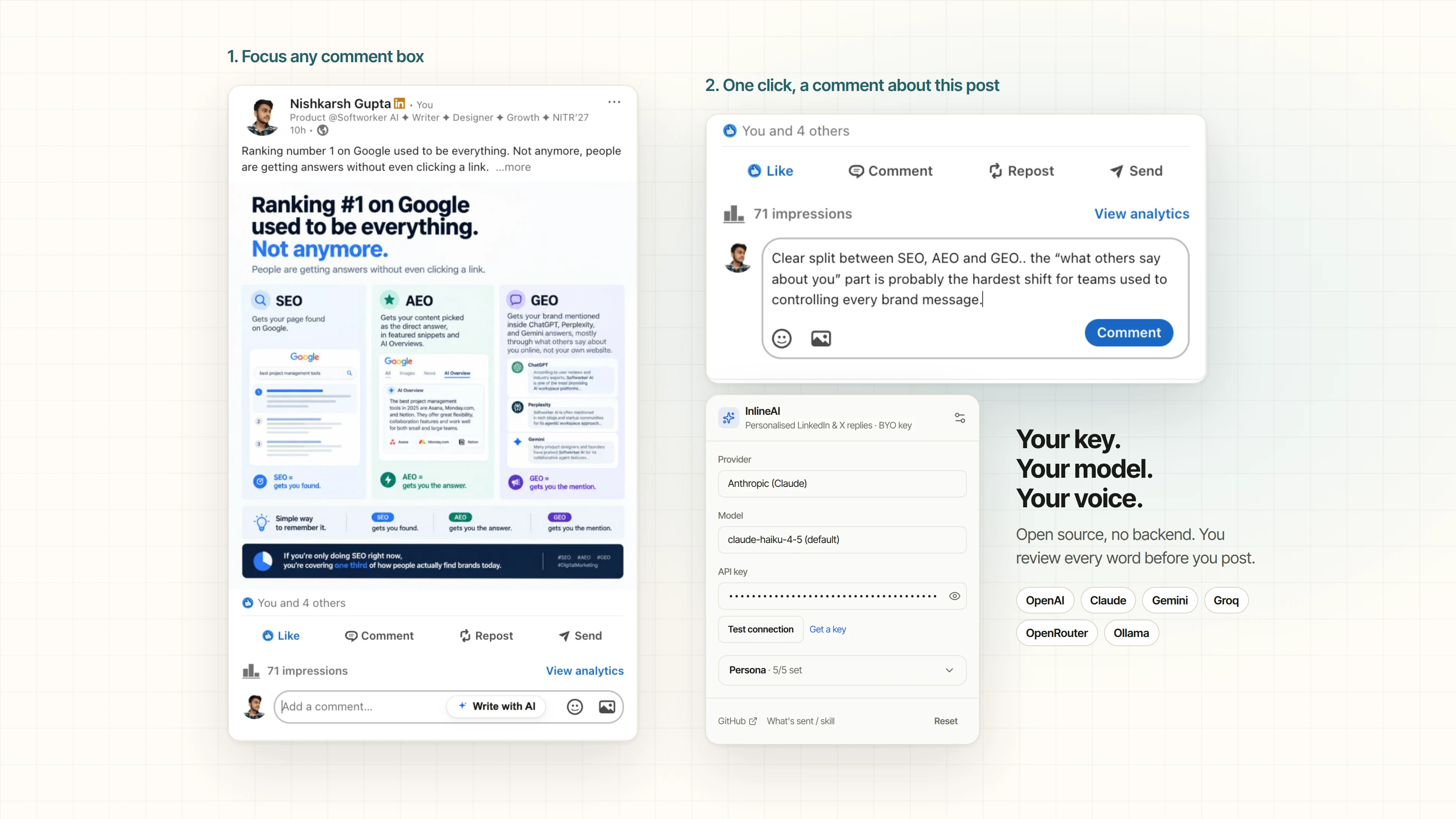
A Chrome extension that writes a LinkedIn or X comment in one click, in your own voice.
Read case study